Not long ago, buying or selling a home started with a conversation. Now it starts with a scroll.
Before a buyer ever steps inside—or a seller ever fields a serious offer—the decision-making process is already underway online. Photos aren’t just part of listings anymore. In many ways, they are the listings. And whether people realize it or not, they’ve become one of the most important trust signals in the entire transaction.
Whether you’re selling a condo in Nashville or a three-bedroom home in Sacramento, professional photography can help create a stronger first impression and build trust from the moment buyers discover your listing.
For buyers: Trust starts with what you see
When you’re searching for a home, you’re not just looking at properties—you’re making snap judgments about them.
Within seconds, listing photos answer a series of silent questions:
Is this home well cared for?
Is it worth my time?
Can I picture myself here?
“Listing photos are basically the first showing,” says Evan Roberts, Founder and CEO of Visually Sold. “Most buyers start their home search online and decide within seconds of scrolling whether a listing is worth a closer look, or a scheduled tour.”
That speed matters. Because when photos fall short thanks to dark lighting, awkward angles, or cluttered rooms, buyers don’t usually dig deeper. They move on.
Even if the home itself is great.
On the flip side, professional photography creates clarity. Rooms feel true to size. Light looks natural. Details are visible without being overwhelming. The result is confidence that what you see is what you’ll find in person.
And that reliability builds trust before you ever walk through the door.
This story was originally posted at https://www.redfin.com/blog/
For sellers: Presentation shapes perception
If you’re selling your home, it’s easy to think of photos as a marketing detail. Important, but secondary to pricing or timing.
In reality, they shape how buyers perceive everything else.
Your asking price, for example, doesn’t exist in a vacuum. Buyers evaluate it through the lens of your photos. If the visuals feel polished and intentional, the price often feels more justified. If they feel rushed or amateur, buyers start looking for reasons to discount.
Professional photography also brings expertise that most homeowners—and many agents—don’t have themselves.
“A professional realtor has specific knowledge and expertise when it comes to buying and selling homes,” says James Mauro of jmaurophoto. “What most lack is expertise and the proper equipment for photographing homes for listing purposes. Hiring a qualified and experienced professional photographer fills that gap.”
That gap is where perception lives. And perception, in real estate, can directly influence how quickly your home sells and for how much.
Mauro adds, “Often, when a potential buyer sees poor photos, that house is overlooked.”
Not negotiated down. Not debated. Just overlooked.
The emotional factor buyers don’t always notice
Buying a home is often framed as a financial decision. But in practice, it’s just as emotional.
You’re not simply choosing a property, you’re imagining a future.
That’s where professional photography does its most important work. Not by exaggerating a space, but by helping you understand how it feels.
“Every home has a story long before the sign goes in the yard,” says Casey Smith, Photography Director at HomeFX Media. “Great real estate photography isn’t about documenting rooms—it’s about translating emotion into imagery, allowing buyers to imagine a life unfolding within the space before they ever step through the front door.”
When that translation works, something shifts. A listing stops being just another option and starts feeling like a possibility.
For buyers, that creates momentum. You’re more likely to schedule a showing, ask questions, and stay engaged.
For sellers, it means your home isn’t just seen—it’s remembered.
Consistency builds confidence for buyers and sellers
Professional photography doesn’t just improve individual listings—it creates consistency buyers and sellers can rely on.
“The most common reasons our clients come to us are time management or brand management,” says Steve Buchanan, Director of Select Property Studios. “Working with a professional media provider frees up an agent’s limited time for more pressing, profitable work. It also means every listing gets consistently high-quality media, which builds trust with buyers and sellers alike. And that trust is often the difference between winning a listing and losing it.”
For buyers, that trust shows up as clarity and reliability. For sellers, it shows up as confidence that your home is being presented at the standard today’s market expects.
Standing out in a crowded search
For buyers, online listings can blur together quickly. Similar layouts, similar price points, similar neighborhoods.
What breaks that pattern is visual clarity.
“A skilled photographer doesn’t just take pictures of a home; they stage the shot, control the light, and tell a story that helps buyers imagine living there,” says Morgan Riley, Marketing Manager at Lemonlight. “If you’re serious about standing out in a crowded market, opting for a professional photographer is one of the most effective ways to drive interest before the first in-person showing.”
From a buyer’s perspective, that interest often translates into clarity. Listings with strong photography are easier to understand, easier to compare, and easier to trust.
From a seller’s perspective, it means your home isn’t competing on guesswork. It’s competing on clarity.
The signal sellers send without saying a word
There’s another layer to all of this—one that doesn’t get talked about as much.
When you invest in professional photography as a seller, you’re sending a signal. While photography can’t change the condition of a home, it can signal that the property has been thoughtfully prepared and professionally presented.
You’re signaling that the home has been cared for, that the sale is being handled thoughtfully and that details matter.
Buyers pick up on that, even if they can’t articulate it. And in a market where many decisions are made quickly, those signals can tip the balance.
What this means for your next move
If you’re buying a home, strong listing photos are more than marketing—they’re a filter. They help you quickly identify homes that are worth your time and reduce the chances of walking into something that feels different than expected.
If you’re selling, they’re one of the most controllable factors in how your home is perceived. Pricing, timing, and market conditions all matter—but photos are the first impression that frames all of them.
And unlike many parts of a real estate transaction, that first impression is something you can directly influence.
Trust begins before the showing
By the time a buyer schedules a tour, a surprising amount has already been decided.
They’ve formed expectations. They’ve compared your home to others. They’ve decided whether it feels promising or risky.
Professional photography doesn’t guarantee a sale. But it does something just as important: it builds early trust.
In today’s market, that trust often begins long before the front door ever opens.
This story was originally posted at https://www.redfin.com/blog/
]]>
June 25, 2020
One of the best Real Estate Photographers in Atlanta in 2020
For the fourth consecutive year JMAUROPHOTO has been recognized by Expertise as one of the best 15 Real Estate Photographers in Atlanta. "We are very proud to have earned this distinction for the fourth year in a row."
JMAUROPHOTO has been selected by Expertise (www.expertise.com/about) as one of the Best Real Estate Photographers in Atlanta. 136 Real estate photographers were selected and scored on more than 25 variables across five categories. The results were analyzed to determine the best real estate photographers in Atlanta, GA. The five categories included:
- Reputation - A history of delighted customers and outstanding service
- Credibility - Building customer confidence with licensing, accreditations, and awards.
- Experience - Masters of their craft, based on years of practical experience and education.
- Availability - Consistently approachable and responsive, so customers never feel ignored.
- Professionalism - Providing service with honesty, reliability, and respect.
Read more about this distinction and about Expertise by visiting www.expertise.com/ga/atlanta/real-estate-photographers.
About JMAUROPHOTO
JMAUROPHOTO, LLC is a photography company specializing in residential and commercial architectural photography. Professional photographic services are offered to home builders, realtors, decorators, interior designers, and home improvement companies primarily in the Atlanta market, but in other states as well. The company also specializes in executive headshot and corporate event photography and takes pride in delivering the highest quality service and value to its clientele. For more information visit jmaurophoto.com/realestate. Visit our architectural portfolio at www.jmaurophoto.com/architectural-portfolio.
About Expertise
Expertise is a Seattle-based company whose goal is to be a hub where qualified experts can connect with people to share their knowledge, experience, and skills. The company strives to establish connections with both businesses and users to help them connect with each other by creating lists of the best local professionals in each US city to give their readers the confidence they need to make the right choices.
Contact: James Mauro, JMAUROPHOTO, LLC. [email protected] | www.jmaurophoto.com/realestate | 770.330.8640

Many people who wear eyeglasses have glasses with a non-reflective coating. Even so, when photographing someone with glasses it is sometimes impossible to eliminate the reflection of lighting. There are all kinds of tricks to removing the glare while taking the photo: changing the angle of the lights, the subject, or even the glasses. Once I even removed the lenses from the glasses!

Original photo with glare
In the case of my most recent headshot session, no matter what I did I couldn't eliminate the reflection. I tried everything I could, but there just wasn't enough time to keep experimenting.

Photo without glasses on
My solution was to photograph the subject without his glasses. When I got to my studio I did some magic and got the result I was looking for.
These photos show the original photo with the reflection, a photo without his glasses on, and the final result.

Result
February 21, 2019
JMAUROPHOTO is one of the best Real Estate Photographers in Atlanta in 2019
For the third consecutive year JMAUROPHOTO has been recognized by Expertise as one of the best Real Estate Photographers in Atlanta.
JMAUROPHOTO has been selected by Expertise (www.expertise.com/about) as one of the Best Real Estate Photographers in Atlanta. 140 Real estate photographers were selected and scored on more than 25 variables across five categories. The results were analyzed to determine the best real estate photographers in Atlanta, GA. The five categories included:
- Reputation - A history of delighted customers and outstanding service
- Credibility - Building customer confidence with licensing, accreditations, and awards.
- Experience - Masters of their craft, based on years of practical experience and education.
- Availability - Consistently approachable and responsive, so customers never feel ignored.
- Professionalism - Providing service with honesty, reliability, and respect.
Read more about this distinction and about Expertise by visiting www.expertise.com/ga/atlanta/real-estate-photographers.
About JMAUROPHOTO
JMAUROPHOTO, LLC is a photography company specializing in residential and commercial architectural photography. Professional photographic services are offered to home builders, realtors, decorators, interior designers, and home improvement companies primarily in the Atlanta market, but in other states as well. The company also specializes in executive headshot and corporate event photography and takes pride in delivering the highest quality service and value to its clientele. For more information visit jmaurophoto.com/realestate. Visit our architectural portfolio at www.jmaurophoto.com/architectural-portfolio.
About Expertise
Expertise is a Seattle-based company whose goal is to be a hub where qualified experts can connect with people to share their knowledge, experience, and skills. The company strives to establish connections with both businesses and users to help them connect with each other by creating lists of the best local professionals in each US city to give their readers the confidence they need to make the right choices.
Contact: James Mauro, JMAUROPHOTO, LLC. [email protected] | www.jmaurophoto.com/realestate | 770.330.8640
]]>
By Angie Bersin, Redfin
As technology continues to improve, growing numbers of home sellers find themselves looking into the benefits of using virtual staging to help sell their home. But just what is virtual staging and how does it stack up against physically staging a home to sell?
As the name implies, virtual staging is done on the computer rather than in real life. This means that, unlike traditional staging, you don’t rent any furniture, decor, or accents. Instead, virtual staging digitally inserts all of those same items into photographs of empty rooms in the home. This, in turn, helps to attract potential buyers online to tour the home, where they can then use their imagination and consult the virtual staging photos in order to envision how each room would look with furniture inside.

Preparing for Virtual Staging
One of the most important steps when preparing to virtually stage a home is to professionally photograph the rooms that will be virtually furnished. It’s crucial that these images are high-resolution to ensure that the final listing product is perfected for online buyers.
 Professional Photographed RoomIt's important to have a room professionally photographed in high resolution.
 Virtually StagedThe same room after it has been staged
Make sure to remove any unwanted items before capturing each room on camera - this will speed up the process of editing. Once the photos are primed and ready for staging, the virtual stager can add furniture and decor to compliment the overall style of the home. High-quality listing photos improve the final staged product by giving the stager the opportunity to work with an ideal canvas.
Benefits of Virtual Staging
Virtual staging is usually a lot less expensive than traditional staging is. Here’s a quick glimpse at what you’re looking at:
Virtual staging costs somewhere between $39 and $199 per room, depending on the contractor you use, your location and the amount of space you need staged.Traditional staging can cost several hundred dollars per month, depending on the stager you use, how much furniture you need to rent, your location and the number of rooms you need staged.
Here are a few additional benefits of virtual staging:
- Can help you showcase an empty home’s best features
- Is cost-effective when compared to traditional staging
- Attracts prospective buyers’ attention online
- Offers you the opportunity to stage any number of rooms
- Allows you to stage flex rooms in multiple ways
Drawbacks of Virtual Staging
Being able to see the home fully furnished is the main benefit of traditional staging. It allows prospective buyers to walk into a home and picture themselves living there without any of the guesswork of what kind of furniture they may need to purchase and where to place it. That work is done for them and, as a result, 33 percent of Realtors say that the home’s value actually increases an additional one to five percent when professionally staged, according to the National Association of Realtors (NAR).
Here are some reasons you may want to stick with traditional staging:
- Gives buyers real-life perspective when they tour the home
- Prevents buyers from having to tour a completely empty, vacant home
- Appeals to buyers’ sense of imagination
- Makes spaces appear larger and enables prospective buyers to gauge size
- Helps your home stand out in buyers’ memories after they leave
Regardless of which method you choose, it’s important to make sure your home looks ready to sell before it’s listed. First impressions are often a deciding factor for buyers and staging is a powerful tool to create a strong impression and sell your home quicker.
For more information visit www.jmaurophoto.com/virtual-staging.
Contact JMAUROPHOTO at [email protected]
]]>

|

|

|

|
At JMAUROPHOTO we are always looking for services to offer our Real Estate and Architectural clients that can enhance the presentation and presence of the homes they are marketing. The latest endeavor we have embarked on is virtual home staging, which can be a cost saving alternative for realtors and new home builders who are promoting vacant homes lacking furnishings. After researching many options, we have chosen a partner who, in our opinion offers the best service and quality for our clients. We see this offering as a cost-saving alternative to physical staging for vacant new constructions offered by new home builders and vacant homes marketed by realtors. A staged home typically attracts more attention than a vacant home.
For new home builders seeking photography of new models for brochures and website publicity, this can be a tremendous cost saving alternative to the expense of physical staging, which can cost thousands of dollars in staging fees, furniture rental, etc. The same benefits are also applicable for Realtors marketing vacant new or pre-inhabited.
FAQ's
Q: How much more time would this service add to delivering finished photos for my listing?
A: Generally the turn-around is 24 to 48 hours depending on the number of photos, however we can provide rush processing for a nominal fee.
Q: Potential home-buyer will see a staged home on internet-based listings and brochures, but not when they get to the home.
A: A reasonable explanation is that specific rooms have been "staged" to make the home more appealing and to give potential buyers a good idea as to furniture placement and how the home could be decorated.
Q: Which are the best rooms to "stage?"
A: In our opinion, the most important rooms are those that commonly draw the most attention: Family/Great Room, Kitchen, and Master Bedroom, but any room in the home can be staged.
Q: Does the home have to be staged at the same time as the original photography?
A: No. Rooms can be staged at any time, so if the home is listed with less than desirable activity, we can stage any room to help enhance the listing and generate more interest. A staged home typically attracts more attention than a vacant home.
Q: How good is virtual staging?
A: Our reputation is based on excellent photography, service, and value and would only consider a partner with the same objectives. We have found a partner who in our opinion delivers excellent, realistic, and life-like renderings of staged rooms. We invite you to formulate your own opinion by viewing the samples below.
Q: Can furnishings also be removed?
A: Yes. It is possible to remove unwanted furnishings as well.
Pricing
Pricing is based on a single room/image, a three room/image package, and a six room/image package:
Single Room/Image: $60/room
Three Rooms/Images: $150 (package savings = $30)
Six Rooms/Images: $300 (package savings = $60)
Below you will find several before and after examples of recently photographed vacant homes which have been virtually staged. These are homes photographed by JMAUROPHOTO. Click on any photo to enlarge it for more detailed viewing.
Sample 1 - Unstaged Great Room |
Sample 1 - Staged Great Room |
|
|---|---|---|
 Sample 1 - Unstaged |
 Sample 1 - Staged Great Room |
|
Sample 2 - Unstaged Living Room |
Sample 2 - Staged Living Room |
|
 Sample 2 - Unstaged Living Room |
 Sample 2 - Staged Living Room |
Naturally this is not a solution for all situations and pricing is a consideration. However, compared to the cost of physically staging a home, this may be a good alternative. For more information, click HERE to send us an e-mail. We look forward to hearing from you.
]]>January 18, 2018
JMAUROPHOTO selected as one of the best Real Estate Photographers in Atlanta in 2018
For the second time in as many years, JMAUROPHOTO has been recognized by Expertise as one of the best Real Estate Photographers in Atlanta.
JMAUROPHOTO has been selected by Expertise (www.expertise.com/about) as one of the Best Real Estate Photographers in Atlanta. 140 Real estate photographers were selected and scored on more than 25 variables across five categories. The results were analyzed to determine the best real estate photographers in Atlanta, GA. The five categories included:
- Reputation - A history of delighted customers and outstanding service
- Credibility - Building customer confidence with licensing, accreditations, and awards.
- Experience - Masters of their craft, based on years of practical experience and education.
- Availability - Consistently approachable and responsive, so customers never feel ignored.
- Professionalism - Providing service with honesty, reliability, and respect.
Read more about this distinction and about Expertise by visiting www.expertise.com/ga/atlanta/real-estate-photographers.
About JMAUROPHOTO
JMAUROPHOTO, LLC is a photography company specializing in residential and commercial architectural photography. Professional photographic services are offered to home builders, realtors, decorators, interior designers, and home improvement companies primarily in the Atlanta market, but in other states as well. The company also specializes in executive headshot and corporate event photography and takes pride in delivering the highest quality service and value to its clientele. For more information visit jmaurophoto.com/realestate. Visit our architectural portfolio at www.jmaurophoto.com/architectural-portfolio.
About Expertise
Expertise is a Seattle-based company whose goal is to be a hub where qualified experts can connect with people to share their knowledge, experience, and skills. The company strives to establish connections with both businesses and users to help them connect with each other by creating lists of the best local professionals in each US city to give their readers the confidence they need to make the right choices.
Contact: James Mauro, JMAUROPHOTO, LLC. [email protected] | www.jmaurophoto.com/realestate | 770.330.8640
]]>

Photographers and Copyrights…
Real Estate Photography
This article is written specifically with regard to real estate photography, but the same copyright principals can be applied to all forms of photography.
A client recently inquired about the ownership of photography taken on their behalf. Their thinking was that if they pay for the photography, then they should “own” the photos and can “sell” them at their discretion. The example is a situation in which a realtor (A) loses a listing to another realtor (B) who wishes to reuse the photos. Realtor A feels that they should be able sell the photos to Realtor B. They don’t think that the photographer should get paid again for the same photos, and they want to recoup the money that they initially spent on the photography. With this logic, Realtor B, in the same situation, could also “resell” the photos to another realtor, and so on. Although at first this may be understandable it is wrong.
This is a good question and worthwhile discussion. It may seem odd, but when an individual or company retains a photographer to take photos, that party does not own the photos – the photographer does. You are essentially commissioning the photography and purchasing the right, or license to use the resulting photos as agreed. The photographer (“artist”) owns the copyrights to all photos, and this copyright is protected the Federal Copyright Act of 1976. What the photographer does with the photos and how they are handled is up to his or her discretion, or as described in a mutually accepted agreement. A professional photographer rarely gives up copyrights or ownership of photos unless that is in specified in the terms of the agreement, and in those cases the photographer generally charges a premium to give up his/her ownership. You would be very hard-pressed to find a professional photographer willing to do so. I handle my photos in much the same way, and in every notification of “Your Photos are Ready” for realtors I include the following statement:
“***Important Licensing Information***
These photos are owned and copyrighted by JMAUROPHOTO, LLC. They are licensed only to you and specifically for the purpose of marketing your home listing, including print and on-line publication (MLS, FMLS, etc.). These photos may not be used or distributed to any third party, including the homeowner for any purpose without express permission by JMAUROPHOTO, LLC.”
When a photographer is commissioned for photography, the client is given the rights, or license to use the photos for the specified purpose and often for a specified period of time. Some RE photographers go as far as to limit the amount of time the realtor can use the photos, and if that time expires before the home is sold, they charge a relicensing fee. Additionally, some photographers are very specific about how the photos can and cannot be used.
In my experience, it is a rare occurrence that I discover that another realtor using photographs that I have taken for a specific client. It has only happened twice that I know of, and in one case the realtor actually made screen captures and used them in her listing. This effectively amounts to theft. In the other case, when I found that my photos had been given to a second realtor and were being used without permission, we had a very nice conversation and I ended up getting that realtor as a client.
According to copyright laws, unless otherwise agreed, photos can absolutely not be
 resold, or the rights to use them transferred without the permission of the lawful owner (the photographer). The easiest way to avoid any controversy is to never give or resell photos to another realtor or agency. If the other realtor is going to pay for photos, then they may as well hire a photographer.
There are agencies, such as the PPA (Profession Photographers Association) who fight for the rights of photographers to protect their copyrights and theft of their photos (considered art). Any photographer who simply relinquishes or gives up their rights and ownership of their photography without charging extra to do so is not doing themselves or the professional photographic community any favors.
You can find more information on the Photography For Real Estate website by clicking HERE and on the Professional Photographers of America (PPA) by clicking HERE.
Disclaimer: This is not a legal interpretation of photographic copyright law, but only a summary in layman’s terms.
]]>
June 24, 2017
JMAUROPHOTO selected as one of the best 19 Real Estate Photographers in Atlanta
For the second time in 2017, JMAUROPHOTO has been recognized with an industry award.
In February, JMAUROPHOTO was voted by the Houzz community as a winner of the Best of Houzz 2017 award for Service and for Design Photography. See the Press Release by clicking HERE.
Now JMAUROPHOTO has been selected by Expertise (www.expertise.com/about) as one of the 19 Best Real Estate Photographers in Atlanta. 140 Real estate photographers were selected and scored on more than 25 variables across five categories. The results were analyzed to determine the best real estate photographers in Atlanta, GA. The five categories included:
- Reputation - A history of delighted customers and outstanding service
- Credibility - Building customer confidence with licensing, accreditations, and awards.
- Experience - Masters of their craft, based on years of practical experience and education.
- Availability - Consistently approachable and responsive, so customers never feel ignored.
- Professionalism - Providing service with honesty, reliability, and respect.
Read more about this distinction and about Expertise by visiting www.expertise.com/ga/atlanta/real-estate-photographers.
About JMAUROPHOTO
JMAUROPHOTO, LLC is a photography company specializing in residential and commercial architectural photography. Professional photographic services are offered to home builders, realtors, decorators, interior designers, and home improvement companies primarily in the Atlanta market, but in other states as well. The company also specializes in executive headshot and corporate event photography and takes pride in delivering the highest quality service and value to its clientele. For more information visit jmaurophoto.com/realestate
About Expertise
Expertise is a Seattle-based company whose goal is to be a hub where qualified experts can connect with people to share their knowledge, experience, and skills. The company strives to establish connections with both businesses and users to help them connect with each other by creating lists of the best local professionals in each US city to give their readers the confidence they need to make the right choices.
Contact: James Mauro, JMAUROPHOTO, LLC. [email protected] | www.jmaurophoto.com/realestate | 770.330.8640
]]>If you are a realtor that is serious about selling homes, then you should be taking advantage of the benefits of a real estate photographer who is as serious about photography as you are about selling houses!
Much of your success in selling homes depends on the first impressions people get when viewing homes on-line. Are you putting your best foot forward? Are your photos good enough to convince a potential buyer to want to schedule an appointment? It is well known that good photography sells houses. There is a reason why the most successful realtors and real estate teams use professional photographers. Do not risk your success with anything other than magazine quality photography captured by a professional using professional grade equipment.Your photographer should be using a professional full-frame camera, a sturdy tripod, a wide-angle lens, and the proper lighting to ensure that rooms are well and evenly lit.


You decide! which photos do you want representing your listings? The age-old saying is true: "you get what you pay for." In the examples above, the realtor ended up paying for two complete sets of photos by two different photographers. Save yourself time, aggravation, and money. Your clients are paying you good money to sell their homes. They chose you because you are the best. You already provide them outstanding service. Make sure that your outstanding service includes outstanding photography.
Call on JMAUROPHOTO to get photography that will help you sell homes fast.
photos@jmaurophoto
www.jmaurophoto.com/realestate
© 2017 JMAUROPHOTO
]]>
Real Estate Photography is more challenging than you may think. Photography is all about the lighting - using it to your advantage, keeping is as even as possible, consistent, and controlling shadows. To do it correctly, there is more often than not, a need to use artificial light (flash or strobe), but that can create some challenges as well. For example light from the flash reflecting on a cabinet, window, TV, or other reflective surfaces. Often these challenges are overlooked and/or dismissed. In fact, many people may not even notice it unless it was really nasty. However, a good photographer who takes pride in his/her work should make every effort to avoid it, and if that is not possible, fix it.
In the photo below, a flash was used in order to light the room properly. However, as you can see in the top photo (before), this resulted in a glare on the cabinets, especially on the left. There are ways to minimize, but not effectively eliminate this when capturing the photo. However, as you can see in the bottom photo (after), the glare has been eliminated, making the photo much more appealing.
It's in the details!


]]>
January 17, 2017
Houzz Announces Best Of Houzz 2017 Winners
JMAUROPHOTO has been voted by the Houzz community as a winner of the Best of Houzz 2017 award for Service and for Design Photography.
Annual Survey and Analysis of Community of Over 40 Million Monthly Users Reveals the Top-Rated Home Remodeling Professionals and Most Popular Home Designs.
Houzz Inc., the leading platform for home renovation and design, today announced the community’s picks for Best Of Houzz 2017, a homeowner-to-homeowner guide to the top home builders, architects, interior designers, landscape pros and other residential remodeling professionals on Houzz from cabinetry or roofing pros to painters.
“We are so pleased to award Best of Houzz 2017 to this incredible group of talented and customer-focused professionals,” said Liza Hausman, vice president of Industry Marketing for Houzz. “Each of these businesses was singled out for recognition by our community of homeowners and design enthusiasts for helping to turn their home improvement dreams into reality."
The Best Of Houzz is awarded annually in three categories: Design, Customer Service and Photography. Design award winners’ work was the most popular among the more than 40 million monthly users on Houzz. Customer Service honors are based on several factors, including the number and quality of recent client reviews. Architecture and interior design photographers whose images were most popular are recognized with the Photography award.
A “Best Of Houzz 2017” badge appears on winners’ profiles, as a sign of their commitment to excellence. These badges help homeowners identify popular and top-rated home professionals in every metro area on Houzz. Winners will be announced globally throughout the month.
To see the most popular designs: http://www.houzz.com/best-of-houzz-2017
About JMAUROPHOTO
JMAUROPHOTO, LLC is a photography company specializing in residential and commercial architectural photography. Professional photographic services are offered to home builders, realtors, decorators, interior designers, and home improvement companies primarily in the Atlanta market. The company also specializes in executive headshot and corporate event photography and takes pride in delivering the highest quality service and value to its clientele. For more information visit jmaurophoto.com
About Houzz
Houzz is the leading platform for home remodeling and design, providing people with everything they need to improve their homes from start to finish – online or from a mobile device. From decorating a small room to building a custom home and everything in between, Houzz connects millions of homeowners, home design enthusiasts and home improvement professionals across the country and around the world. With the largest residential design database in the world and a vibrant community empowered by technology, Houzz is the easiest way for people to find inspiration, get advice, buy products and hire the professionals they need to help turn their ideas into reality. Headquartered in Palo Alto, Calif., Houzz also has international offices in London, Berlin, Sydney, Moscow and Tokyo. Houzz and the Houzz logo are registered trademarks of Houzz Inc. worldwide. For more information, visit houzz.com.
Realtors, by now you have heard that the MLS limit of photos you can use for your listings has been increased from 25 to 40! For the realtor it means that you can showcase your homes with additional photos and better attract potential buyers to your listings, which is especially beneficial for selling larger homes. For the photographer it means it will take longer to photograph and process the additional photography for clients who would like to take advantage of the increased number of photos.
How will this affect your photography? Will your photographer increase prices in order to provide you with the additional photos?
NOT if you are a JMAUROPHOTO client.
JMAUROPHOTO clients will not be affected by any price change for their photography as a result of this great news. Our clients are already accustomed to receiving more high quality, professional photos than they require. In some cases, we have provided in excess of 60 photos to choose from. Now your life will be easier because now you can select 15 more photos for your listings.
Contact JMAUROPHOTO for your professional real estate photography.
770-330-8640
]]>
JMAUROPHOTO named exclusive photographer by Smith Douglas Homes
Atlanta, GA (March 22, 2016) – JMAUROPHOTO, LLC has been selected by Smith Douglas Homes as their exclusive photographer in Atlanta. Having engaged in multiple projects together in 2015, including photography for eight new model homes throughout the Atlanta Metro area, Smith Douglas Homes needed consistent high quality photography for current and future projects.
The Atlanta-based residential home builder recently embarked on a website redesign project, which recently launched, and needed high quality photography to showcase the homes both digitally and in print. According to Dusty Talbert, Marketing Manager at Smith Douglas homes, “We previously used James Mauro (JMAUROPHOTO, LLC) to photograph one of our model homes as well as several events and were very pleased with the results, so when it came time to update our website, he was a natural choice.” The company regularly applies for awards and submits articles and photos to trade publications and saw a need to increase the quality of the photography for this purpose as well. “Having experienced Jim’s commitment to service and quality, we decided to ask him to be our exclusive photographer” said Talbert.
James Mauro (JMAUROPHOTO, LLC) adds, “We are very honored and happy to have been named as the exclusive photographer for Smith Douglas Homes and are committed to continuing our relationship and providing them with the professional level of photography and service that they have come to expect from JMAUROPHOTO.”
About Smith Douglas Homes. Established in 2008, with over 40 years of previous experience in the home building industry, Smith Douglas Homes is an award-winning home builder committed to building the best value homes in the business. They provide home buyers lower pricing and offer more square footage and better quality than any similar home. At Smith Douglas, buyers can be assured that their new home is crafted for quality, built with integrity and will maintain enduring value for life. www.smithdouglashomes.com
About JMAUROPHOTO: JMAUROPHOTO, LLC is a photography company specializing in residential and commercial architectural photography. Professional photographic services are offered to home builders, realtors, decorators, interior designers, and home improvement companies primarily in the Atlanta market. The company also specializes in executive headshot and corporate event photography and takes pride in delivering the highest quality service and value to its clientele. Learn more about JMAUROPHOTO at www.jmaurophoto.com
Contact: James Mauro 770-330-8640 [email protected]
]]>Adding photos of the amenities in a community in which you are selling a home is a great enhancement to your listing. Families are interested in the facilities of swim/tennis clubs, and families with children are interested in child-friendly playgrounds. Displaying amenities photos with your listing can make the difference of whether or not a potential buyer gets interested in your listing.


Our Amenities Library now includes the amenities for 28 communities in the Atlanta Metro area. Most of them are in West Cobb, but there are also several from Cherokee County, Paulding County, and Bartow County as well. If you have not visited, you're invited to go to www.jmaurophoto.com/amenities-library and see if we have added the amenities for a community in which you have a home listed or are planning to.
Refer to the gallery notes for information on how you can access these photos. Naturally you can always send an e-mail to [email protected] for additional information.
]]>
We are happy to announce a new place for Real Estate Professionals to find resources to help with listing and marketing homes.
We have added a new section to our web site for Realtors to find useful information, tools, and resources to assist in their marketing activities. The site includes:
|
Staging and Photo Prep If professional staging is not an option, in order to ensure the best possible photography there are still some simple preparations that can easily be accomplished to ensure that the home is presented as a showcase and will greatly enhance the quality of your photography. Read More HERE. Download our photography staging guide by clicking here: Staging for Success. If you prefer a version without photos, then click here: Staging Guide. These guides will not only prove beneficial for photography, but also for preparing the home for open houses and buyer viewings. We are happy to provide this as a complimentary service to any realtor. Feel free to download and print this, and provide it to your clients. This information is also available for online viewing HERE. |

|
|
Amenities Library Another nice feature for marketing homes is the community or subdivision amenities. Is your listing in a swim/tennis club? Does it have a kid-friendly playground? Including photos of the community entrance and/or amenities can help sway a potential buyer in your favor. Visit our amenities library to see if there are amenities photographs that may help you market your listing. These are available to download for a nominal one-time use fee of for unlimited use. The fee is waived for JMAUROPHOTO clients. Please contact us for your download code. The link and download code will be included any time we photograph a home for you. Check back periodically - we are actively expanding this library to include additional communities. Click HERE to access our Community Amenities Library. Bookmark the link and check back regularly as we are continuously adding new subdivisions to the library. |

|
|
For Listing Presentations Every homeowner knows that quality photography helps bring attention to their home. Win the deal by showing your potential clients the difference that professional photography makes when you hire JMAUROPHOTO as part of your comprehensive home marketing program. Download photos that show the difference between iPhone photos, Point and Shoot Camera photos, and Professionally captured photos delivered by JMAUROPHOTO. Click HERE to access the photos, then contact us at [email protected] to request your download code. This is available as a free service to our clients. |
|
|
Promotional Materials With a 30 year product marketing career in the printing industry, we are also available to design promotional materials to help market your listings. Contact us for more information. |
|
]]>
A photographer is often much more than the person behind the camera. During the photo session, the photographer, with or without an assistant has many tasks to complete prior to the subject(s) arriving, especially for on-location photography such as professional corporate headshots.
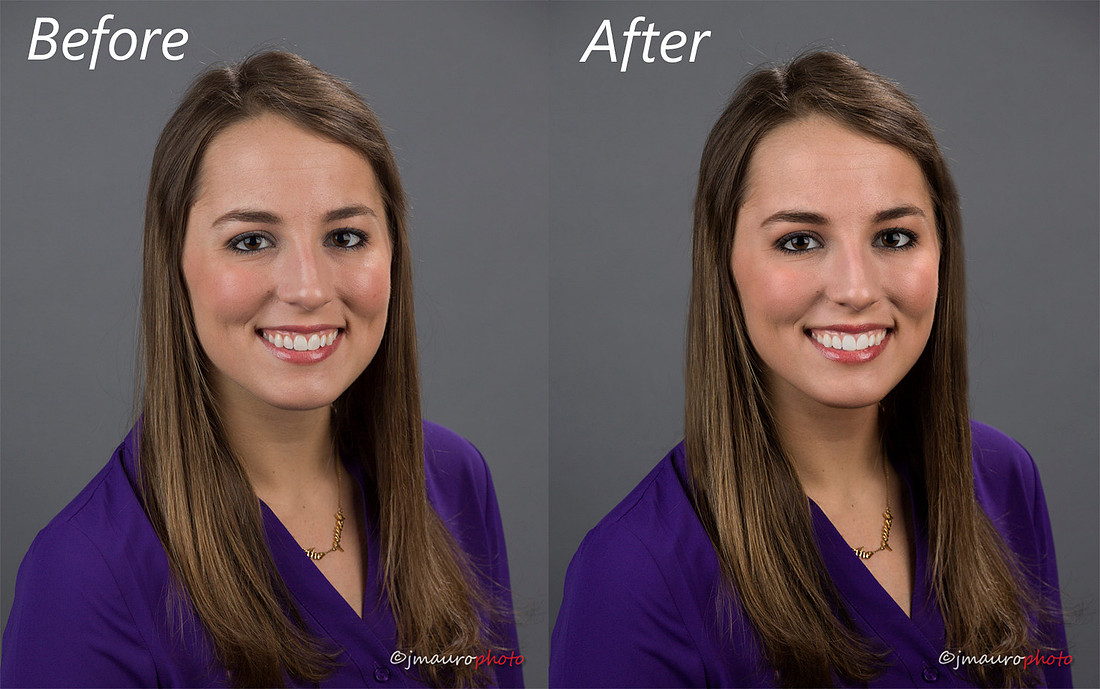
(click on the photo to enlarge it)
Before the session starts
The lighting and backdrop must be carried to the location and set up, along with the backdrop stand and backdrop. Depending on the session, there can be as little as one studio light ("commonly referred to as a "hot lamp") and a reflector, or as many as four, even five studio lights set up to achieve the most even lighting and control shadows.
After all of the lighting is set up, the next step is to set the lighting for the proper exposure using a light meter. Each light is metered separately to derive the proper and desired exposure. Then they are all measured simultaneously to get the correct setting for the camera.
I like to connect, or "tether," my camera to my laptop during headshot sessions. Not all photographers do it, but I think it's a great way to work because it allows the subject to see his or her results seconds after a series of photos are captured, allowing us to make pose changes and ensure that the subject is getting exactly what they want.
After the session
After the session is over there is still more work to do for the photographer. This is when the photographer becomes a plastic surgeon and a dentist. Read more about what happens after the photography by clicking HERE. I often get retouching requests such as:
"Can you remove the wrinkles around my eyes?"
"Can you remove my double chin?"
"Please remove the fly-away hair."
"Make me look thinner."
"Make me look younger."
In the example below, the photo was pretty good to start with, but the subject made these requests...
"Do you think you could make my face a little thinner (but still normal looking)?"
"The same with my arm closest to the camera/back of my shirt (of course I'm overly critical but I see it as sort of hunchback-ish.)"
"Also this might be a longshot but I was wondering if there's any way you could make my hair appear thicker/more voluminous, especially on the right side?"
You can see the before and after results in the photos above. The before shot is directly out of the camera - it was only cropped appropriately for a headshot. The "After" shot has been retouched as requested.
]]>
Before and After


Is it Bracketing or HDR?
Exposure Bracketing
Simply explained, exposure bracketing is a process in which multiple photos (usually between three and seven) of the same subject are taken in sequence using different exposures. Exposures are changed using either different shutter speeds (Tv) and the same aperture (Av, or f-stop), or different aperture settings and the same shutter speed. When using three exposures, one photo is underexposed, one is properly exposed, and one is overexposed. The purpose is to increase the dynamic range of the photograph from the shadow to highlight areas. Exposures are adjusted by using shutter speed (Tv – Time Value) or by using lens opening (Av – Aperture Value). Using a slow shutter speed or using a low f/stop (wide opening) increases the amount light reaching the sensor. Increasing the shutter speed or using a high f/stop (small lens opening) decreases the amount of light reaching the sensor. Remember, a lower f-stop number increases the lens opening when the shutter is released. Increasing light increases exposure; decreasing light decreases exposure.


HDR (High Dynamic Range) photography
HDR photography is a form of bracketing and can usually be identified by highly detailed photos with very saturated colors. Depending on how it is applied. some HDR tends to be very surreal looking, and in many cases HDR results tend to be “over-baked” and fake looking. HDR photography, or as some call it, HDR Blending,” is very useful for artistic photography in which the photographer’s desire is to accentuate vibrant colors and extreme detail. Good examples of HDR can be seen in landscape photography in which the sky and cloud formations become very well defined, or to accentuate the colors of the rising or setting sun. Twilight and dusks scenes of buildings and cityscapes also provide great examples of the proper use of HDR, as does the photography of abandoned structures and rusted objects (buildings, cars, trucks, boats, etc.). Properly used, HDR is a very effective form of photography, but when overdone, HDR can leave much to be desired, especially in interior architectural photography.
Many photographers who use the HDR process for blending exposures, especially in real estate photography, tend to apply too much of the effect, resulting in photos that look unnatural, surreal, and artificial. This is not only true of interior photography, but is also of exterior photography.


Underexposed
The images below are far too dark, revealing no detail.


Properly exposed
These image have a nice even exposure, but lack detail and contrast. Colors are not vibrant.


Overexposed
The images are so overexposed that there is no visible detail.


HDR - Fused
In the examples below, colors are saturated and detail is greatly enhanced. Notice on the house how the blue door and window frames that in the normal exposure appear washed out. You can also see the texture in the wood. Also notice how green the foliage has become. Also notice the wood grain in the car (what is left), the leather on the steering wheel, and the moss growing on the dash.


HDR - Tonemapped
These are more extreme examples of HDR.


I
]]>

Every day I receive notifications from LinkedIn regarding recommendations from connections (thank you very much!) as well as LinkedIn recommendations on who to connect with. As I review them there is something striking that 90% of these recommendations have in common... bad headshots. Plus many do not even have a photo at all. In many cases no photo is better than a bad photo!
LinkedIn is your social media connection to other professionals in your industry and related industries therefore your headshot should be a high quality professional representation and likeness of you. Your LinkedIn profile photo should not be from your recent fishing trip or your family vacation at the beach or Sea World. It should not be a photo that your spouse or friend snapped with his/her iPhone or Point and Shoot camera.
Your LinkedIn Profile Photo should be captured by a professional photographer using professional equipment (camera, lens, lighting, backdrop, etc.).
Visit www.mariettaportraits.com for more information and to see recent examples, then contact us by e-mail at [email protected] or by using the contact form on our website.
Download our Professional Headshot Flyer by clicking HERE.
Remembering September 11, 2001...
]]>A few days ago I photographed a newly listed home for sale. The weather was perfect for portraiture because it was overcast and the lighting was very even. However it was not ideal for real estate photography. The exposure on the house itself was good and there were little, if any shadows, but the sky being overcast and grey, left a lot to be desired.
On the way home the sky turned blue, so I stopped and got a few pictures of the blue sky with some nice cloud formations. When I got home I got a little creative and replaced the flat, grey sky with the nice blue sky. I also adjusted the exposure on the house, especially the roof and sun-facing side in order to maintain a realistic appearance. While I was at it I also fertilized the lawn :-).
before

The photo without any enhancements. The exposure on the house itself is good. There are no harsh shadows. But the photo is boring because the sky is bleak
after

The photo after enhancements. The sky is blue with some nice clouds. The exposure on the house is retained, but enhanced to match the sky and appear that it was photographed on a nice sunny day. The lawn has been fertilized.
]]>
Real Estate Photography Staging and Preparation
Do your real estate pictures make viewers say, "I've got to see this house!" or do they say, "eh, let's see the next one" ?
When potential buyers see the first photo of your home, that photo should entice them to see the rest. If after having seen all of the photos they are interested in a showing, then the photography has served its purpose. However, no matter how good the quality of the photography, if the subject of the photography is not up to par, then instead of convincing your viewer(s) to continue looking, they may be more likely to move on to see the next house. If this happens, then the presentation failed. This can easily be avoided by either professional staging or basic home preparation.
Preparing a home for successful photography and showing is an important, yet often overlooked element of the home-selling process. It's surprising how many homes are ill-prepared for photography. Great home photography can be compromised by a home that is not properly staged or prepared for the photography that is ultimately the first glimpse a potential buyer sees of the home. As a photographer, I take all of "my" photos very seriously and personally. When I enter a home to photograph it, I want "my" photos to be the best representation of the home as possible, and unless the home has been professionally staged, I often find myself moving certain items out of view in an effort to ensure the best photography I can provide to the homeowner and realtor. Having to move items adds to the amount of time required for photography, and the last thing I want to be is an inconvenience. It's best for you and for me if I can efficiently photograph the home, which means getting in and out as quickly as possible without compromising the quality of your photography.
If professional staging is not an option, in order to ensure the best possible photography there are still some simple preparations that can easily be accomplished to ensure that the home is presented as a showcase and will greatly enhance the quality of your photography. When I (or any other good real estate photographer) arrive in the home I may move small items and furniture in an effort to obtain the best “staged” appearance, and I may unplug electrical appliances so the power cords don’t show. There are, however many things that can be done in advance of my arrival that can really help. You'd be surprised how quickly your eye is drawn to burnt out lights, and that is not what you want people to remember when the look at your home. Based on my experience I have compiled a list of things that should be done to assure that your home photography is as good as you expect.
Please review the list below for recommendations to help present the home as best as possible.
- Close Garage Doors
- Ensure that trash cans are out of sight
- Cars should not be parked in the driveway
- Switch on porch lights (but not flood lights), especially for twilight photography
- Blinds or curtains should be drawn/open
- Remove fallen tree limbs and branches from lawn and driveway
- Ensure that missing shutters are replaced

A well manicured lawn makes for excellent curb appeal!
- Open all blinds and drapes to let the light in
- Tilt blinds up about 45 degrees
- Stow away personal items such as iPads, books, magazines, toys, etc.
- Remove items such as dog/pet beds
- Switch off ceiling fans and ceiling fan light
- Hide the power cords for any electrical items
- Replace all burnt-out light bulbs in all light fixtures
This room is ready!
- If there is a fireplace, light it
- Set candles in appropriate areas
- Stow away television remote controls and personal items
- Place several books or magazines on the coffee table or end table
- Arrange pillows on the sofa and other seating areas

This home wasn't professionally staged, but it looks it
- Remove trash cans
- Remove cleaning instruments
- Lower the toilet seat lid
- Remove personal items such as soaps, toothbrushes, brushes and combs, etc.
- Remove all floor mats
- Ensure that towels are fresh and presented properly
A perfectly prepared bathroom.
- Make sure the beds are neatly made
- Items under the bed should be out of view
- Laundry baskets should not be visible
- Remove all personal items from view, especially on the dresser and nightstand
- Light the fireplace

An example of a nicely staged master bedroom
- Set the table or place a centerpiece on the table
- If equipped, switch on the light in the china cabinet
- Straighten the chairs
- Open the curtains and let the light in
- Make it look as if you were having guests over for dinner
A nicely decorated dining room is inviting
- Remove the trash can from view
- Remove all loose items from counter tops
- Remove everything from the refrigerator door
- Set or place a centerpiece on the kitchen table
- Make sure that the sink is clean and free of any dishes, sponges, etc.
- Switch on the stove light
This kitchen is ready for photography... and showing
- Arrange furniture, including cushions, pillows, etc.
- If there is an umbrella, open it
- Remove grill covers; hide propane tanks
- Blow away or rake leaves, cut the lawn, prune and trim shrubbery
- Stow away toys, etc.
This space looks ready for entertaining friends and family!
- Ensure that it is clear of all dirty laundry and laundry baskets
- Close all cabinets
- Remove all items from counters (if possible)
- Clean the appliances to ensure they are free of fingerprints and soaps, etc.
For a downloadable PDF version of this article, click here: Staging for Success
For a downloadable PDF Checklist (no pictures), click here: Photo Checklist
]]>
The Professional Photographers of America (PPA) is the world's largest non-profit photography association organized for professional photographers, by professional photographers with over 25,000 creative members in 54 countries. There is a code of ethics for members to abide by, and the PPA offers professional certifications, which I will soon be taking advantage of. Doing business with a photographer who is a member of the PPA assures that you are working with a professional who takes care to provide quality photography and is dedicated to your satisfaction. Another reason to contact jmaurophoto for your photographic needs!

Prices are on the rise and foreclosures are in decline. According to Zillow, in the past 12 months the average home price in Marietta rose from $189k to $207k: nearly a 10% increase in 12 months. Mortgage rates are still very low at about 4.25% and foreclosures in GA are the lowest in nearly 10 years. The inventory of homes has decreased resulting in higher prices (supply and demand). Read on…
From the Atlanta Journal Constitution, January 13, 2014
"Metro Atlanta foreclosure notices, down 56 percent in January from the same month a year ago, are at their lowest level in a decade. Not so long ago, at the peak of the housing crisis, foreclosed-on homes made up the bulk of those on the market. But the number of foreclosures has been trending downward since 2011. In the past year, housing prices have risen and the inventory of for-sale homes has fallen — in large part because there are fewer foreclosures on the market.
This year, Atlanta Board of Realtors president Todd Emerson said, property values will continue to rise and sales will be up, as well. “Don’t wait for the flowers to start to bloom. Go ahead and put your home on the market now,” he said. “I think we are going to see good activity.”
Read the complete story here: Foreclosure notices at lowest level in a decade.
From the Marietta Daily Journal, January 12, 2014
"The steady decline in the amount of Cobb homes to be auctioned on the courthouse steps continued with another steep drop in the number of foreclosures for February.
According to legal notices published in Friday’s MDJ, 290 properties are scheduled to be up for auction in February, a decrease of more than 26 percent from the 393 properties that were listed for January.
The amount of foreclosed properties scheduled for February is a 62 percent drop from the 760 homes that were on the auction block a year ago in February 2013."
Read more: The Marietta Daily Journal - Foreclosure rates drop by 26 for Feb 2014
With the prediction of higher prices and lower inventory, competition for home sales will increase and home buyers will expect more from real estate marketing efforts.
Get a head start with professional real estate photography from jmaurophoto.
]]>
Virtual Tour of 4826 Rosebury LN NW Acworth GA 30101
]]>
Flash Lighting Experiment
I have seen a lot of photographers modifying the light output from their flashes using a Sto-Fen, and to a lesser extent a Gary Fong Lightsphere, both of which I have. I have also read the opinion of many photographers that light modifiers are not necessary and serve only to eat up battery power. Personally I have had success with the Sto-Fen at wedding receptions and even in real estate photography. Since I have never seen a comparison between using either of these light modifiers compared to using a bare flash, I thought I would take it upon myself. I started out by only wanting to take a few pictures of this Christmas Cactus. While I was at it, I decided to try a few different things.
Here's my disclaimer: I never set out to make a full-blown test, and although this may not be applicable to many situations, in the absence of any similar evaluation (that I know of) I think it effectively shows some differences between using these flash modifiers and not using any. I am sure there are other test elements and parameters that I've overlooked, but hopefully you will find this useful.
The Test
Compare the results with the use of a Sto-Fen, a Gary Fong LightSphere, using the built-in catchlight reflector, and no light modification. Compare
Test Method
For each use case, take a test shot with the flash pointed straight up (1), the flash point forward 2 clicks (2), and the flas pointed forward 3 clicks.
Test Parameters
- Camera mounted on tripod. Flash on-camera.
- Camera: Canon EOS 5D Mark III with latest firmware
- Lens: Canon EF 50mm f/1.4 USM
- Flash: Canon Speedlight 580EXII
- Flash Mode: ETTL II
- Shooting Mode: Aperture Priority
- Shutter Speed: 1/200 sec
- Aperture Value: f/5.0
- ISO Speed: 100
- Metering Mode: Evaluative
- Picture Style: Faithful
The room was lit by natural light and an overhead ceiling fan light (incandescent). The ceiling is a vaulted ceiling, about 9' over the subject and is painted white.
Test Procedure
Take three shots of subject with each test group. Test Group = Flash modifier + different flash angle (3). All photos shot in RAW, converted to JPEG using Lightroom 4.4 with no modification.
Test Results
(clicking on each photo will open it in a large size for better viewing.)
 No Mod_1No Light Modifier. Flash Straight up.
 No Mod_2No Light Modifier. Flash tilted 2 clicks forward.
 No Mod_3No Light Modifier. Flash tilted 3 clicks forward.
 White Card_1Catchlight Reflector (flash), and no light modification.
 White Card_2Catchlight Reflector (flash), and no light modification.
 White Card_3Catchlight Reflector (flash), and no light modification.
 Sto Fen_1Sto-Fen, Flash Straight up.
 Sto Fen_2Sto-Fen. Flash tilted 2 clicks forward.
 Sto Fen_3Sto-Fen. Flash tilted 3 clicks forward.
 LightSphere_1Gary Fong Lightsphere. Flash Straight up.
 LightSphere_2Gary Fong Lightsphere. Flash tilted 2 clicks forward.
 LightSphere_3Gary Fong Lightsphere. Flash tilted 3 clicks forward.
Analysis
Not surprisingly the color reproduced with the flash using no modification and the flash using only the catchlight card is the same. Similarly, the color reproduced with the Sto-Fen and the Lightsphere is the same (or VERY close). In my opinion, the photos taken with the light modifiers produced a more natural and "cleaner" result whereas the "naked" (no modifiers) flash shot favored a warmer result. This was like caused by the overhead lighting. The photos shot without either of the light modifiers are brighter, which is confirmed by the histograms. Also visually and confirmed by the histogram, of the "naked" photos, those using the built-in catchlight card are brighter, especially on the tops of the leaves than those shot with out the card extended.
Comparing the Sto-Fen shots to the Lightsphere shots, in my judgment the Lightsphere produced softer shadows, but the Sto-Fen produced more highlight separation. This is also confirmed comparing the histograms.
Looking at the chair back on the left side of the photo, in all cases the shadowing was minimized or eliminated when the flash was pointed straight up. The least amount of shadowing was realized without either the Sto-Fen or LightSphere. In addition, the only test shot that did not produce a catchlight/reflection on the flower pot was the shot with no modification and the flash pointed straight up.
With regard to the color, I easily adjusted the "naked flash" photos to nearly match the Sto-Fen and Lightsphere photos using the auto white balance feature in Lightroom.
Conclusion
In the end, I think that the best shadow detail was produced using no modifiers and the flash point 3 clicks toward the subject. However, this also produced the harshest shadows. I also think that, in this test anyway, the use of the flash without any assistance, in ETTL II mode produced the best all-around result from highlight to mid-tone to shadow. In retrospect, it would have been a good idea to place a color/grey balance card in the photo as well. Plus there was light reflecting from the window behind the flower which most definitely affected the results. However, it was the same reflection for all four flash test groups, so I think that the test results are still valid.
I'd love to hear your opinions, so please chime in and let me know what you think.
Jim
]]>
I had the opportunity to give a presentation about Real Estate Photography to a real estate agency last week. It was a brief presentation about the services that are provided by jmaurophoto. In my years of presenting to audiences large and small, I have developed a sense about when my presentation is being well received... or not. In this case I had a good feeling about the presentation, especially when showing slides that demonstrated the difference between a professionally photographed room and the same room photographed by the realtor. In this particular case the realtor used a nice Nikon DSLR which is very capable of producing good results. In addition, the realtor knew the proper angles and how she wanted to best highlight the room, so it was not a case of a poor camera or a photographer who didn't know what to do. It was really a case of proper lighting and being able to take the time to get the best possible shot.
The realtors main focus is (or should be!) listing, showing, and selling homes. Anything else is a distraction from that main objective and is an obstacle from obtaining the maximum potential for success. This is why the most successful realtors solicit the time and expertise of professional photographers who are dedicated to providing the best possible photography for a home being listed for sale. A 2010 study by Redfin entitled A Picture is Worth a Thousand Dollars. True or False? revealed that it was well worth the money to have homes professionally photographed.
"Never ones to be satisfied with conventional wisdom, we turned to the numbers to answer the question at the top of every seller’s mind when deciding how to market their home. Is it truly worth the money to pay for professional photography? At Redfin we believe in the power of professional photography. Every house that is listed with our brokerage is marketed with professional photos, and we pick up the tab. So, is it worth the dough?
It turns out that in most cases the answer is a resounding, 'Yes!'" - Redfin

Click HERE to read the complete study.
The fact that good photography sells home has also been highlighted in a Wall Street Journal Article.
"The data also showed that listings with nicer photos get more online attention. And yet, for all this, only 15% of listings incorporate higher-end photography. This is even true at the high-end. Redfin found that more than half of $1 million-plus listings were shot with low-end cameras." - Wall Street Journal
Back to my presentation...
Another slide that caught the attention of the audience was a slide showing a professional Canon DSLR (Digital Single Lens Reflex) camera and a Point and Shoot Canon ELPH camera, the latter of which had a red circle/slash over it. Now there is nothing wrong with the ELPH - I take mine with me almost everywhere I go. But it is clearly not adequate for photographing homes for the purpose of successful sales. This is also made clear in the above-mentioned article.
“...listings with nicer photos gain anywhere between $934 and $116,076.” ...you are likely to receive thousands more if you list your home using DSLR photography than if you used a simple point-n-shoot camera to take the photos yourself." -Redfin
Click HERE to download a very informative article entitled, What Realtors Need to Know About Photography, published by Photography For Real Estate.net. After you read these articles, call me.
So... are you STILL photographing your own listings?
]]>
- Preferred Vendor Program at Keller Williams Signature Partners, West Cobb
- Real Estate Photographers of America
- Photography for Real Estate Directory


First a short story…
My father was an attorney, but he liked to do his own repair work around the house. He was pretty handy, but there were certain things that were best left to the pro’s. One time in particular I recall was when he attempted a plumbing repair. Let’s just say that it wasn’t his best repair. He ended up calling one of his clients who was a plumber that came over to fix what my father started. I’ll never forget as he said, “Frank, do me a favor: you take care of the legal stuff and leave the plumbing to me.” There is a moral to this story – do what you do best, and get the pro’s to do what they do best. They have the right tools for the job, the experience, and the time to do it right.
Are you still taking your own real estate photographs? Are you getting the best quality?
 realtor photophotographed by Realtor
As a matter of course, I browse the multiple listings periodically to look at the pictures and have made the observation that the great majority of photos posted are, to put it kindly, less than ideal. Some are crooked; some are out of focus; most suffer from poor lighting. I imagine that these were more than likely photographed by a realtor trying to save money. Some realtors have decent enough camera’s that are capable to getting a decent picture, but others use point and shoot cameras, and I suspect some are using an iPhone or similar camera-phone. Don’t get me wrong – some point and shoot cameras take excellent pictures, and the iPhone does nice job too. I have both and always have them with me, especially when I just want to snap a picture and don’t want to be lugging around my “good” camera. As good as these perform, they are really not suitable for the professional quality that you need to show off your homes listed for sale. Even if you have a Nikon, Canon, Sony, or other DSLR (Digital Single Lens Reflex) camera that can take good pictures, do you have the time to spend getting the best results possible? Both during and after the photography?
When we enter the home to photograph it, we do so with the right tools for the job. We use the appropriate lens or lenses to capture the rooms and exterior with the best angles. We use lighting equipment and techniques to properly combine natural and studio lighting to minimize shadows and properly illuminate the rooms. We take the time to ensure that certain distractions in the room are either removed or placed out of sight. After the session is over, we download the photos and use software like Adobe Photoshop® and Adobe Lightroom® to remove (clone) unsightly wires (hanging from the back of a TV or telephone, for example), crop the photos, and make any lighting enhancements – all with the objective of ensuring the ideal presentation of your listed homes.
Are you still taking your own real estate photographs? Can you afford the time?
The primary focus of a realtor is to show and sell homes. Anything else that is not directly related to this objective is a distraction that diminishes the effectiveness of achieving the primary objective – and potential success.
If you are a realtor taking your own home photographs, how much time are you spending do that task? 30 minutes? An hour? Wouldn’t that time have been better spent preparing to show a new home or showing the home to a potential buyer? Consider how much better your time could have been spent in the time it took photographing 8 homes. That’s a full day that could have/should have been dedicated to potential buyers or sellers.
We enter the home, not only with the right tools for the job, but also with the experience of knowing how to use them and where to use them most effectively. The camera is on a tripod. Lighting equipment (strobe’s flashes, umbrella’s) is positioned properly to obtain the best results. When we enter the home, we are dedicated to taking the time to do the job right. This is generally about 2 hours, and sometimes more depending on the size of the home and property. Then there is the time after the photography spent downloading, selecting, processing and uploading pictures, which can sometimes take nearly as long as the photography itself. Can you allocate that much time to photography?
Are you still taking your own real estate photographs? Can you really afford it?
When you go to the grocery store to buy a box of cereal, a can of soup, or anything else that is packaged, which one do you pick from the shelf: the box with faded colors or the one with bright, vibrant colors? You know the answer. Studies have proven that everyone, every time will choose the better looking package – even though the contents are identical. The same philosophy applies to real estate photography…
The very first thing a homebuyer sees when considering the purchase of a home is a photograph. I know it because I did it. You know it because you are posting photos of your listings on the Multiple Listing Service site and maybe on your own site. With this in mind, wouldn’t you agree that it is not only important, but critical that your home photography is the best it can be? Anything short of great photography may cause the potential buyer to look to the next picture, the next home, the next realtor. Like the cereal box.
Can you afford your listings being overlooked due to less than perfect photography? The most successful realtors use professional photographers that they trust to get the highest quality photographs of their listings while they are focusing on the prime objective: the business of showing and selling homes. Your clients will know that you are serious about selling their homes when you send in a professional. The price for professional photography is a small price to pay for your success.
]]>There is much more to photography than posing the subject, pointing the camera, and pressing the shutter release. So what happens after the pictures are taken?
In the film days, the photographer took exposed rolls of film to the photo lab and had proofs made, or went to the darkroom to develop the film. The benefit of the darkroom was that it gave the photographer the opportunity to make exposure adjustments that may not have been possible directly in the camera. Aft er the film was developed, it was time to review the results and select only t he best pictures to present to the client. The same was also true when film was sent to the lab. After the initial proofs were delivered from the lab, the photographer spent time sorting through and screening the proofs to ensure that only the best were presented to the client. It was a time-consuming process and usually meant that the client had to wait several weeks or months before having the chance to see any results.
It's a different story today with digital cameras, but there are still some similarities. Instead of sending the exposed film to the photo lab or developing it in the darkroom, digital photos are downloaded from the cameras memory card to a computer, and that’s when most of the work REALLY starts. Since film is no longer a factor influencing the cost of photography, the number of pictures taken is only limited by time and by the capacity of the memory card (or cards) in the camera. The result is that photographers can and often do take more photos than they really need. After the photo session or event is over is when most of the work of the photographer begins.
Here some things to consider about what a photographer does after the pictures are taken...
 When the event or session is over and we get home or to the studio (for many photographers it's the same), it's time to transfer the pictures from the camera (or memory card) to a PC (or Mac). The pictures are organized into the library of a software editing program, for example Adobe Lightroom or Photoshop. These software tools are the modern photographers "darkroom." After all of the pictures have been transferred, it is time to sort through them and select only the ones “worthy” of further consideration. The time it takes to do this is directly related to the number of pictures taken; this can easily turn into a very long, time-consuming procedure. We are not only evaluating poses, but also the exposure and cropping possibilities. It is amazing what corrections can be applied with the right software... and more importantly the knowledge of how to use it.
Once the number of photos has been reduced it is time to look at each one and determine whether or not any exposure corrections should be applied (brightness, contrast, white balance, etc.). This step is commonly referred to as "post-processing." Photographic experience really helps here because if the photographer knows the concepts of proper exposure, then little if any further adjustments to exposure may be required. In this step, we can also add sharpness, convert photos to black and white, sepia tone, cream tone, etc. and add a variety other special effects. We can soften the image, add a circular vignette, smooth skin tones and remove blemishes, and even place the subject in a completely different setting or remove unwanted objects from the pictures. Other very useful tools in post-processing are cropping and rotating the picture, which can result in dramatic effects.
After all of the post processing is completed it is time to upload the finished pictures to the web site, where the client can proof and purchase pictures of choice. This also gives the client the opportunity to make any requests for the application of special effects to specific pictures. Depending on the individual agreement, the pictures may optionally be "burned" to a CD or DVD fo r delivery. Uploading the photos to the web site is the best option for the sake of convenience, cost, and efficiency. Once they have been uploaded the client has access and can download "Facebook resolution" versions and purchase prints or books directly from the site, and can use the photographers web site for sharing pictures on-line with friends and family (if enabled – this is standard on our site).
Depending on the number of pictures taken, the post-processing step can be one that takes as much time as, or even more than the photo session itself. If you consider the photography of a wedding taking six hours, you can easily a dd another six hours of "behind the scenes" work by the photographer. This can easily double if there are special requests by the client to do add effects like combining color and black and white in the same photo, or special retouching. The amount of time spent on each photo depends on what is being done to it. The simplest modifications are straightening, cropping and lighting adjustments. These take on the average about 90 seconds per photo (open – modify – save). If special effects are also applied, especially those requiring advanced use of Photoshop (changing colors, smoothing skin tones, eliminating unwanted elements), then the time spent on those pictures can easily accumulate to twenty or more minutes – per picture.
To keep it simple, we will assume that the average amount of time spent on each photo is only 90 seconds. Let’s also use a wedding an example, and that 700 photos were taken over a 6 hour period (that is VERY easily done). We will also assume that from the 700 photos only 500 of them will be selected. Not including the amount of time that it takes to transfer the pictures and sort through all 700 to get to 500, we are now looking at 750 minutes of post processing time. Simple math tells us that 750 minutes is 8 .3 hours, or 12 hours and 30 minutes. Then after all that, the photos have to be either uploaded to the hosting site or burned onto a CD or DVD. In this case, you can see how the original 6 hours of photography easily turns into 18 – 20 hours of total time dedicated to the photo project.
Let’s also use a simpler example of a family portrait session lasting 90 minutes and resulting in 30 pictures. Then let’s consider that the 30 pictures is narrowed down to 15 which will be presented to the family for proofing and printing. Using the same time assumptions as above, we are adding about 23 minutes (minimum) for post-processing. So even though the total amount of time required is far less than that of a wedding, you can see how 90 minutes worth of photography can easily turn into over two hours of time dedicated to the family portrait. On top of that, add some special affects as mentioned earlier and you can see how the time rapidly adds up.
So when you consider hiring a photographer, remember that it’s not only him or her showing up and taking some nice pictures. There is a lot of time and work spent after your photo session to make sure that you get pictures that you will be delighted with and want to show off to your friends and family.
Please leave a comment and like us on Facebook if you found this useful.
Jim
]]>
]]>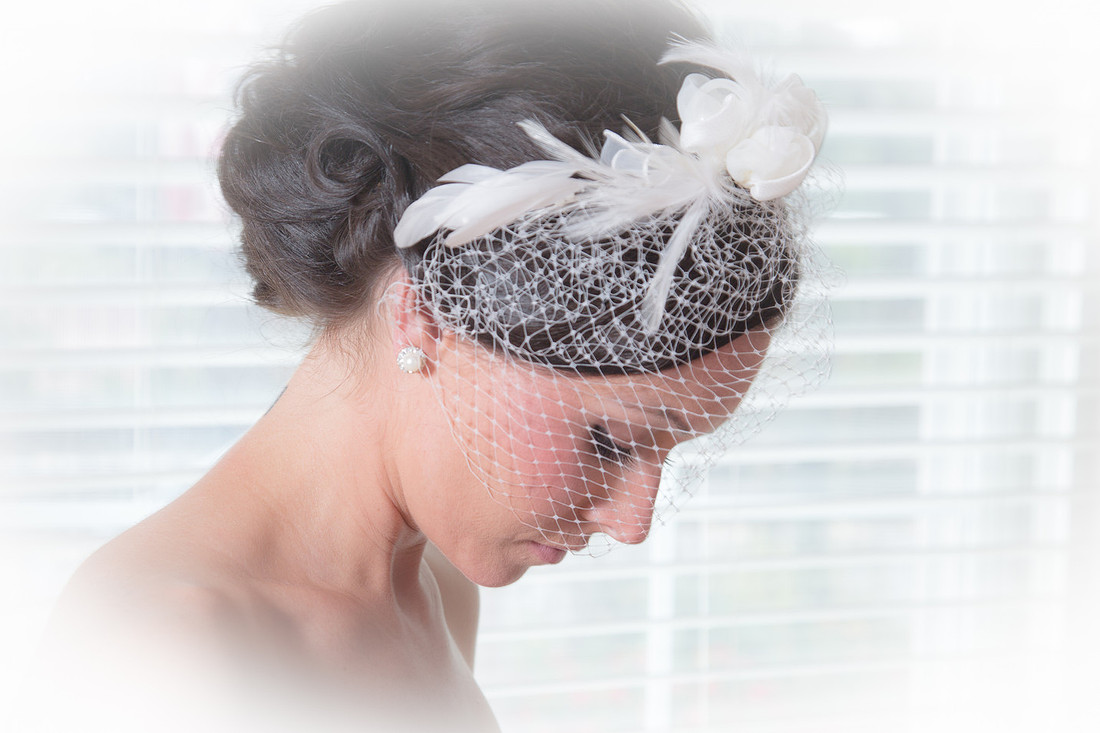 This past Saturday I spent the entire day photographing a wedding. The bride wanted to be treated as a model and I did my very best to meet/exceed her expectations. I hope she will be happy!
The marriage ceremony took place in the gazebo in the Marietta (GA) Square and the reception was in the nearby Marietta History Museum. BTW, I recommend checking the museum out - it is very interesting!
Now the fun starts! I have close to 1,000 pictures (12 hours of photography) to manage, which means deleting the ones I don't like and duplicates, and then reviewing each for cropping, conversion to B&W, Sepia Tone, Cream Tone, etc. cropping, and adding some requested special effects. All of the will take almost as long as taking the pictures. Luckily I've already gotten through a lot of it and am well on my way to giving access to the Bride and Groom so they can select the pictures they want for their album and sharing with their friends. It was a real privilege for me to do this and I am really happy that they put their confidence in me to get the job done, which I wouldn't have been able to do as effectively without the assistance of my wife. Thank you!
Jim
]]>
]]>
Yesterday I did photography for Real Estate home sales. It was a great experience and the house was really beautiful. As always, I learned a lot about doing it and I am really looking forward to my next job.]]>
Had a great time photographing the Cookies & Corks event for the Girl Scouts of Greater Atlanta on Thursday night. The pictures turned out good and are posted on the jmaurophoto Facebook page.